Best Knife Steel for Bushcraft: How to Choose the Right Blade Material
Why It Matters More Than You Think
When it comes to bushcraft and survival, your knife is more than just a cutting tool — it’s a lifeline. From carving shelters and processing firewood to food prep and defense, your bushcraft knife needs to perform reliably under rugged, real-world conditions. But while blade shape and handle design get a lot of attention, one critical factor often gets overlooked:
The type of steel used in your knife.
The steel determines your knife’s edge retention, toughness, corrosion resistance, and ease of sharpening — all essential qualities for survival and outdoor use. In this article, we’ll break down the most common types of knife steel used in bushcraft knives, what to look for, and why choosing the right one is absolutely vital.
Why Knife Steel Matters in Bushcraft
A bushcraft knife faces more abuse than your average pocket knife. You’ll be using it for:
- Feather-sticking and fire prep
- Batoning wood
- Notching and carving
- Game processing
- Making traps, tools, and shelter
This means your blade must strike a balance between toughness, edge retention, and ease of maintenance in the field. The wrong steel can chip, rust, or dull too quickly — leaving you with a liability instead of a tool.
Key Properties of Knife Steel (And Why They Matter)
When comparing bushcraft knife steels, pay attention to the following:
- Edge Retention – How long the knife stays sharp during use
- Toughness – Resistance to chipping, breaking, or fracturing under stress
- Hardness – Ability to hold an edge (usually measured in Rockwell scale: HRC)
- Corrosion Resistance – Ability to resist rust in wet or humid environments
- Ease of Sharpening – How easily the edge can be maintained with field tools
Common Knife Steels for Bushcraft (Pros & Cons)
Here’s a breakdown of the most popular steel types used in bushcraft knives — and what each brings to the table.
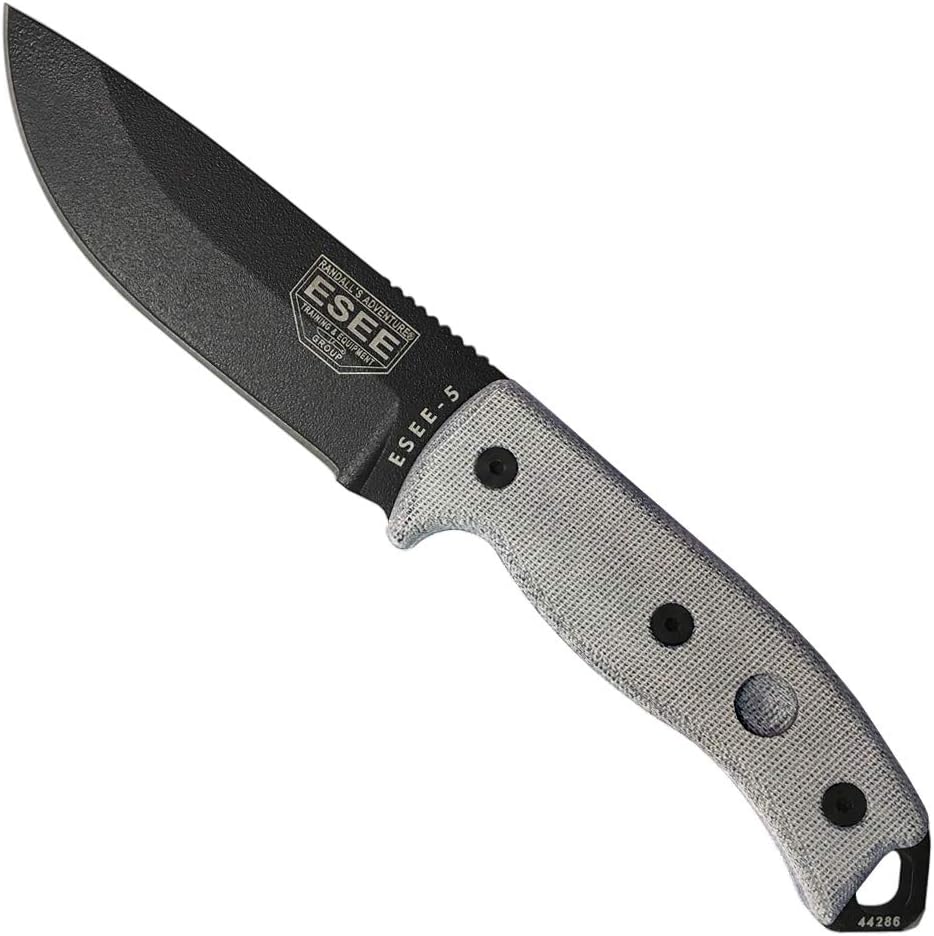
1. 1095 High Carbon Steel
1095 carbon steel is one of the most popular and trusted materials for bushcraft knives — and for good reason. Known for its excellent toughness and ease of sharpening, 1095 is a high-carbon steel that performs exceptionally well in demanding outdoor tasks like batoning, carving, and feather-sticking. It can take a razor-sharp edge quickly, even with basic field sharpening tools, making it ideal for prolonged use in survival situations. While it doesn’t offer much in terms of corrosion resistance, regular maintenance — such as oiling and drying after use — easily mitigates this. For bushcrafters who value reliability, edge maintenance, and sheer durability, 1095 carbon steel remains a proven and affordable choice.
Type: Non-stainless, high-carbon
Typical Hardness: 56–58 HRC
Pros:
- Extremely tough; great for batoning and heavy use
- Easy to sharpen in the field
- Affordable and widely available
- Holds a decent edge with proper care
Cons:
- Rusts quickly without maintenance
- Requires regular oiling and drying after use
Best for: Rugged survivalists who don’t mind a little upkeep. Ideal for dry climates or those who clean gear religiously.
RECOMMENDED 1095 CARBON STEEL BUSHCRAFT KNIFE: ESEE Authentic Model 5
2. O1 Tool Steel
O1 tool steel is a high-performance carbon steel favored by many bushcraft enthusiasts for its exceptional edge retention, fine grain structure, and ease of sharpening. It holds a razor-sharp edge well and excels in precision tasks like carving, feather-sticking, and woodworking — making it ideal for traditional bushcraft applications. O1 also offers good toughness, allowing it to withstand batoning and general camp chores without chipping. However, like other non-stainless steels, it is prone to rust if not properly maintained, so regular cleaning and oiling are essential. For those who prioritize sharpness and cutting control in the field, O1 tool steel is a top-tier choice for a dependable bushcraft knife.
Type: Oil-hardened carbon steel
Typical Hardness: 57–62 HRC
Pros:
- Very fine grain structure for excellent edge sharpness
- Good toughness and edge retention
- Takes a razor-sharp edge easily
Cons:
- Prone to rust (though less so than 1095)
- Needs a protective coating or patina
Best for: Bushcrafters who prioritize sharpness and carving ability, especially for fine woodworking or feather-sticking.
3. D2 Steel
D2 steel is a popular choice for bushcraft knives thanks to its impressive edge retention and semi-stainless properties. Often referred to as a “tool steel,” D2 offers a hard, wear-resistant edge that stays sharp through prolonged use, making it well-suited for repetitive tasks like carving, whittling, and light chopping. While it’s not as tough as high-carbon steels like 1095, it still handles most bushcraft duties reliably, as long as it’s not subjected to extreme impact or prying. Its higher chromium content gives it better corrosion resistance than traditional carbon steels, though it’s not fully stainless — so basic maintenance is still recommended. For users who value long-lasting sharpness and lower maintenance in the field, D2 strikes a solid balance between performance and practicality.
Type: Semi-stainless tool steel
Typical Hardness: 58–61 HRC
Pros:
- Excellent wear resistance and edge retention
- More corrosion-resistant than 1095 or O1
- Tough enough for hard use if not abused
Cons:
- Can be difficult to sharpen in the field
- Less tough than carbon steels under high impact
Best for: Users who want a longer-lasting edge and don’t mind carrying a diamond sharpener or field strop.
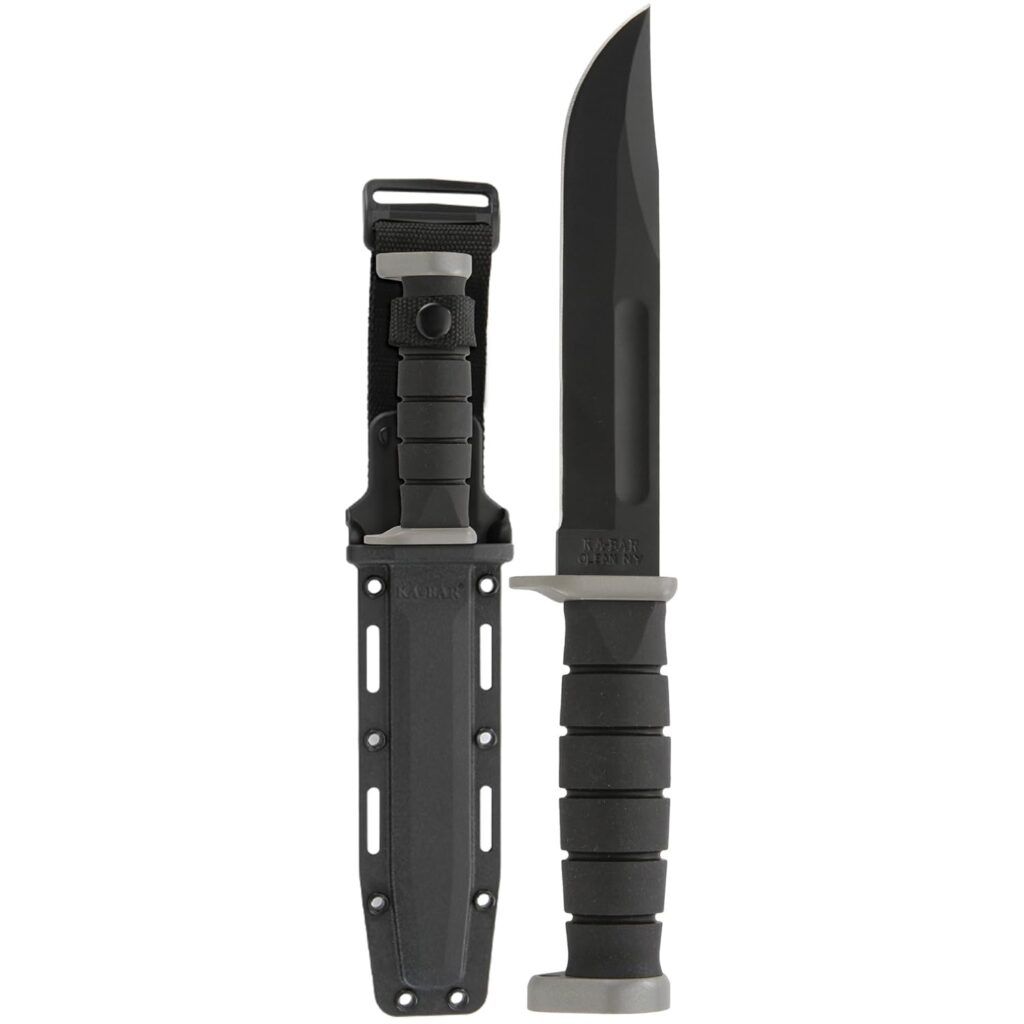
RECOMMENDED D2 STEEL BUSHCRAFT KNIFE: KA-BAR 1292 D2 Extreme
4. CPM 3V
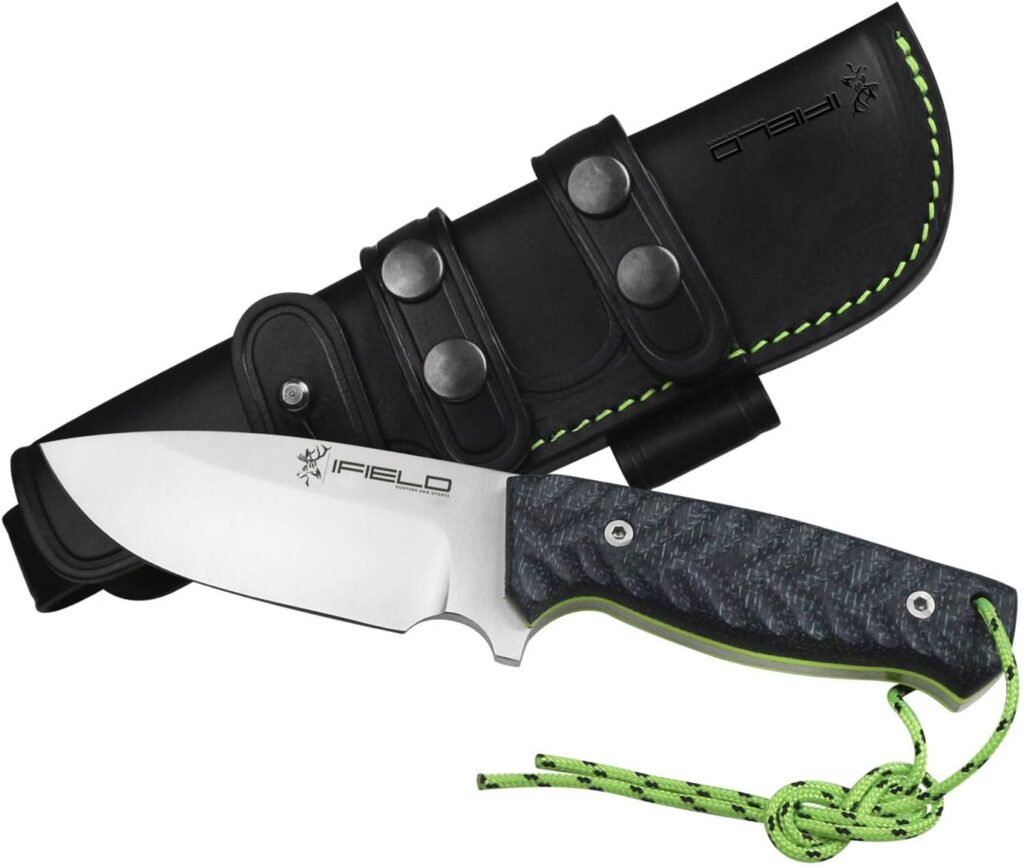
CPM 3V is a premium steel highly regarded in the bushcraft and survival community for its exceptional toughness and durability. Designed specifically for high-impact use, CPM 3V resists chipping and breaking far better than many traditional steels, making it ideal for demanding tasks like batoning, chopping, and heavy wood processing. It also offers good edge retention without becoming brittle — a rare combination that suits extended use in rugged environments. While not fully stainless, its improved corrosion resistance over basic carbon steels means it requires less frequent maintenance, though regular care is still advised. For serious bushcrafters who need a knife that can take a beating and keep performing, CPM 3V is one of the most reliable high-end steels available.
Type: Premium high-toughness tool steel
Typical Hardness: 58–60 HRC
Pros:
- Extremely tough — resists chipping and breaking
- Good edge retention for its toughness
- Reasonably corrosion-resistant (though not stainless)
Cons:
- Expensive
- Not as easy to sharpen as carbon steels
Best for: Serious outdoorsmen and professionals who need a “do-everything” bushcraft knife and don’t mind paying for quality.
5. Stainless Steels (Sandvik 12C27, 14C28N, VG-10)
Stainless steels like Sandvik 12C27, 14C28N, and VG-10 are popular choices for bushcraft knives, especially for users who value corrosion resistance and ease of maintenance. These steels are well-suited for wet, humid, or coastal environments where high-carbon steels might rust quickly. Sandvik 12C27 offers a good balance of sharpness and toughness, making it great for general camp tasks, while 14C28N improves on that with enhanced edge retention and corrosion resistance. VG-10, commonly found in higher-end knives, provides excellent sharpness and wear resistance, though it can be slightly more brittle under hard use. Overall, these stainless steels are ideal for bushcrafters who want a reliable, low-maintenance blade that still performs well in carving, food prep, and light woodwork, without the constant need for oiling and rust prevention.
Type: Stainless
Typical Hardness: 56–60 HRC (varies by steel)
Pros:
- High corrosion resistance; great for wet/humid environments
- Easy to maintain and clean
- Reasonable edge retention (especially 14C28N and VG-10)
- Often used in lighter, EDC-style bushcraft knives
Cons:
- Not as tough as carbon or tool steels
- May roll the edge under heavy stress
- Slightly harder to sharpen in the field (depending on alloy)
Best for: Preppers in wet, coastal, or humid regions who prioritize corrosion resistance and low maintenance.
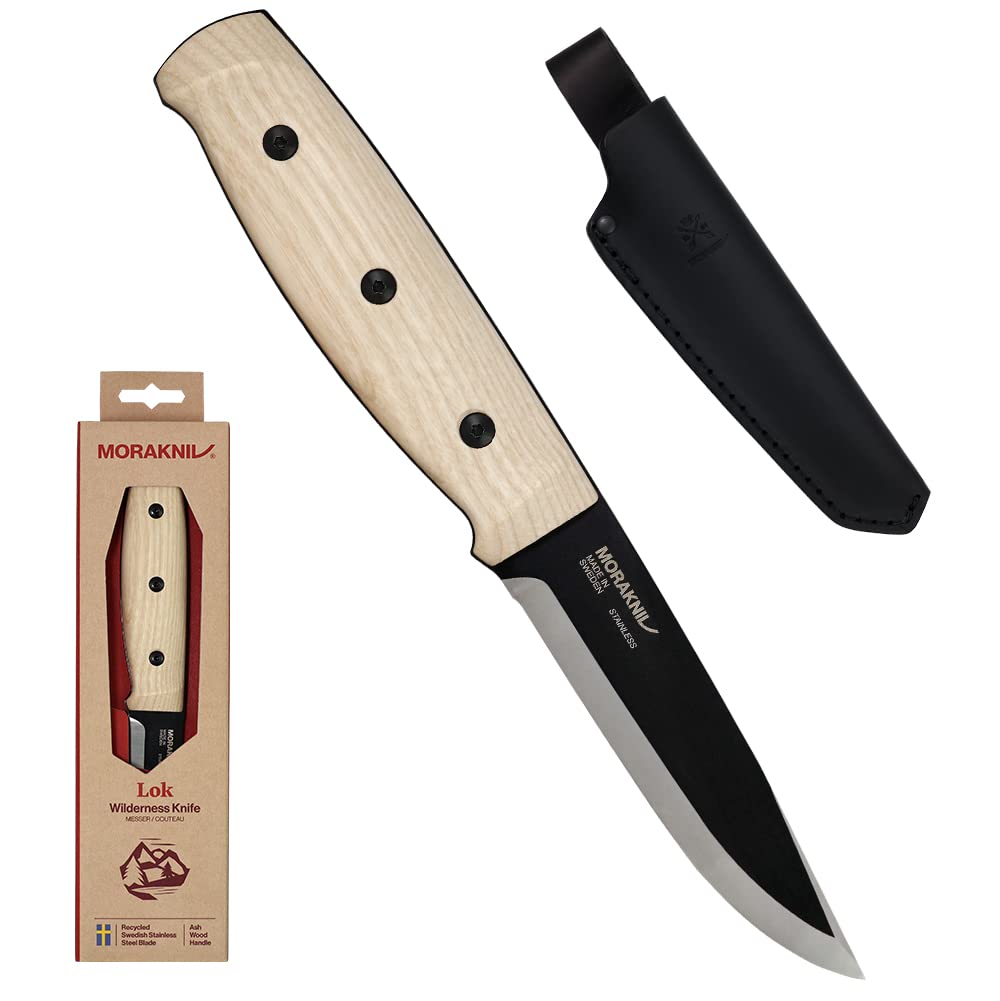
RECOMMENDED STAINLESS STEEL BUSHCRAFT KNIFE: Morakniv Lok BlackBlade (S) Ash Wood
So, Which Steel Should You Choose?
Here’s a quick summary based on your environment and usage:
| Situation | Recommended Steel |
|---|---|
| Wet/Humid/Coastal | 14C28N, VG-10, or D2 |
| Dry climates | 1095 or O1 Tool Steel |
| Heavy wood processing | CPM 3V or 1095 |
| Fine carving tasks | O1 or Sandvik steels |
| Long-term edge retention | D2 or CPM 3V |
| Budget-friendly option | 1095 carbon steel |
Field Maintenance Tips (No Matter the Steel)
- Always dry your blade after use
- Apply a thin coat of oil or wax (especially carbon steels)
- Carry a small sharpening stone or field strop
- Avoid hitting rocks or dirty wood to preserve the edge
- Consider forced patina to protect high-carbon blades
Final Thoughts
Choosing the right knife steel for bushcraft is just as important as picking the right blade shape or handle material. It directly affects how your knife performs in the wild — from staying sharp during fire prep to surviving days in wet weather.
Your knife should be an extension of your skills, not a source of frustration. Whether you’re carving traps in the forest or processing kindling during a storm, make sure the steel you trust is up to the task.
✅ Related Post: How to Build a Bug-Out Bag for Beginners
This article contains Amazon affiliate links.