What to Look for in a Multitool for Survival and Emergency Use
Your Essential Buying Guide for Prepping, Bug-Out Kits, and Everyday Emergency Preparedness
Introduction
When it comes to survival and emergency preparedness, few tools are as valuable — or versatile — as a high-quality multitool. Whether you’re bugging out in the wilderness, navigating urban chaos, or dealing with a vehicle breakdown, a well-built multitool can be your lifeline.
But not all multitools are created equal.
In this buying guide, we’ll walk you through exactly what to look for in a multitool for survival and emergency use, which features matter most, and how to choose the right one based on your budget and environment. We’ll also include affiliate links to top-rated multitools available on Amazon to help you find gear you can trust.
Why a Multitool Belongs in Every Survival Kit
A multitool for survival and emergency use is one of the most essential components of any well-prepared bug-out bag. In a crisis, you won’t always have access to a full toolbox, and that’s where a multitool shines — it consolidates dozens of critical functions into one compact, portable device. Whether you’re repairing gear, cutting cordage, opening cans, making shelter adjustments, or performing basic first aid, a quality multitool offers the versatility needed to handle unpredictable situations on the go. With tools like pliers, a knife, screwdrivers, and a saw all in one unit, a multitool maximizes utility while minimizing pack weight — making it a non-negotiable asset in any survival or emergency setup.
A multitool condenses a full tool kit into a pocket-sized device. In survival situations, that compact functionality becomes invaluable. A reliable multitool allows you to:
- Build shelter
- Start a fire
- Repair gear
- Prepare food
- Treat injuries
- Defend yourself (in some cases)
A good multitool can quite literally make the difference between helplessness and resourcefulness in a crisis.
What to Look for in a Survival Multitool
Here are the key features to look for when selecting a multitool that’s truly ready for survival and emergency situations:
1. Full-Size Pliers
Full-size pliers are a crucial feature in any multitool for survival and emergency use because they significantly enhance the tool’s practicality and effectiveness in real-world situations. In a bug-out scenario, you may need to bend wire, remove hot cookware from a fire, fix broken gear, crimp connectors, or even perform emergency first aid tasks — all of which require a strong, reliable grip. Compact or mini pliers often lack the leverage and durability needed for these tougher jobs, whereas full-size pliers provide the strength and control necessary to handle demanding tasks under pressure. Their versatility can save time, reduce frustration, and even prevent injury, making them a valuable asset in any emergency kit.
Pliers are the backbone of any multitool. In a survival setting, you may need to:
- Cut or bend wire
- Remove hot pots from fire
- Secure shelter materials
- Perform gear repairs
Look for:
Needle-nose pliers with a strong grip, integrated wire cutters, and a solid locking mechanism.
Top Pick:
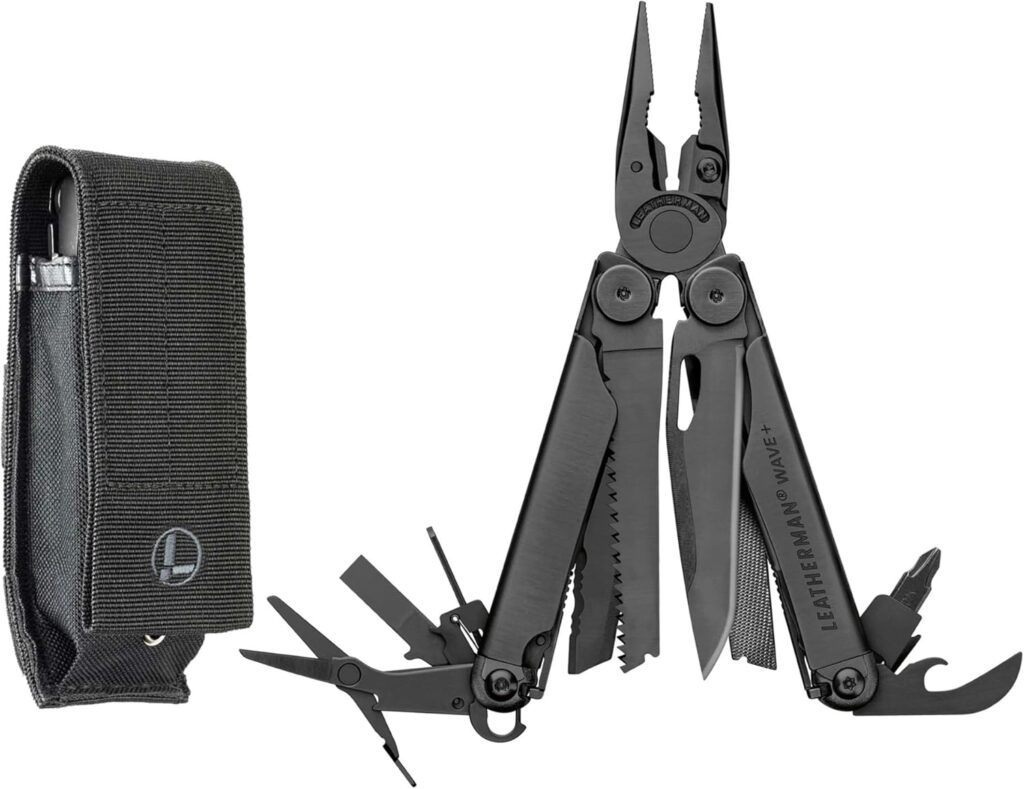
Leatherman Wave Plus Multitool
This best-seller includes strong spring-action pliers, replaceable wire cutters, and a full set of tools. A favorite among military, EDC, and survival users.
2. High-Quality Knife Blade
A good quality knife blade is one of the most essential components of any multitool for survival and emergency use because it serves as a primary cutting tool in a wide range of critical tasks. From preparing food and processing kindling to cutting cordage, fabric, or plastic, a sharp, durable blade can make all the difference in a high-stress situation. In a bug-out scenario, you might not always have access to a dedicated fixed-blade knife, so the blade on your multitool must be reliable, corrosion-resistant, and capable of holding a strong edge. A well-crafted knife blade ensures that you can handle survival tasks quickly and efficiently, without compromising safety or performance.
You’ll use it for:
- Cutting rope or paracord
- Food prep
- Shaving tinder
- Light carving or whittling
Look for:
Plain-edge blade (for control), locking mechanism, one-hand opening if possible.
Top Pick:
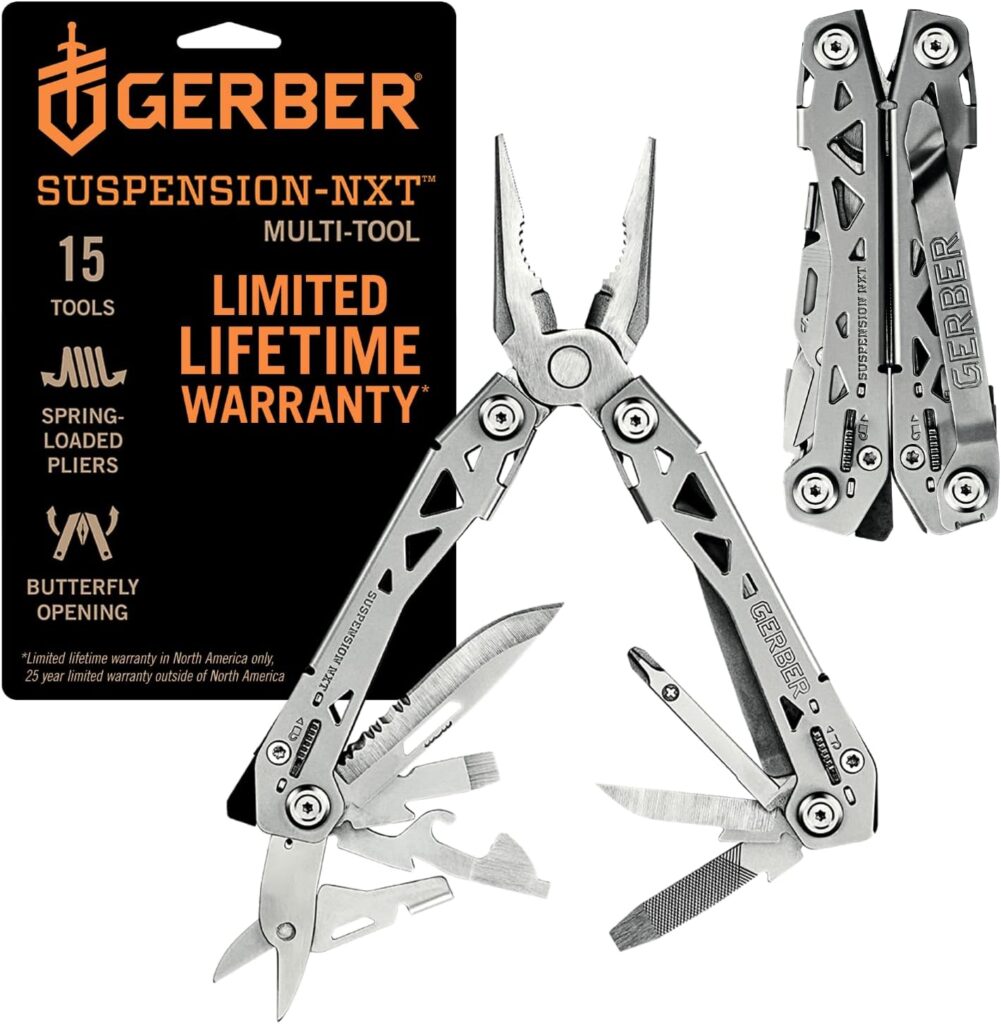
Gerber Suspension-NXT
A budget-friendly multitool with a strong blade, spring-loaded pliers, and sleek EDC-friendly design.
3. Wood or Bone Saw
A good quality wood or bone saw is a vital feature in any multitool for survival and emergency use, especially when you’re dealing with wilderness scenarios. Whether you’re cutting small branches to build a shelter, processing firewood, or needing to handle game in a hunting situation, a sharp, durable saw can dramatically increase your efficiency and capability in the field. Unlike a knife, which is limited in sawing applications, a dedicated saw blade allows for cleaner cuts with less effort, conserving energy and improving safety. In a bug-out situation where every tool must be multi-functional and compact, having a dependable saw built into your multitool provides essential versatility without adding bulk to your gear.
A saw is often overlooked but critical for:
- Cutting branches for shelter or firewood
- Trimming material for traps
- Processing small game
Look for:
Coarse-toothed saw with at least 2.5 to 3 inches of cutting surface. It should lock securely to avoid accidental closure.
Top Pick:
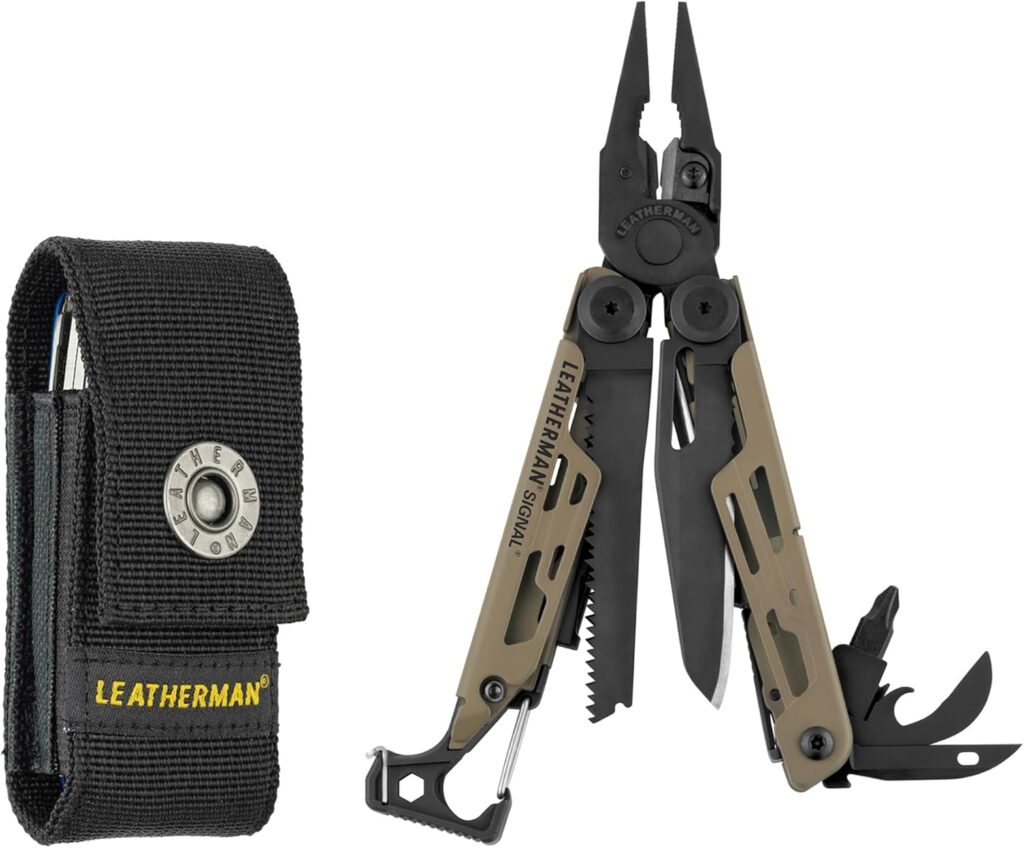
Leatherman Signal
This survival-focused multitool includes a saw, ferro rod, hammer, and whistle — making it ideal for off-grid bug-out scenarios.
4. Screwdrivers (Flathead and Phillips)
A screwdriver is an often-overlooked but highly valuable tool in any multitool for survival and emergency use. In a bug-out situation, you may need to repair gear, tighten loose screws on tools or equipment, open battery compartments, or even disassemble electronics or appliances for parts. Having both flathead and Phillips screwdriver options built into your multitool ensures you’re prepared for a wide range of mechanical fixes that could arise in the field. It adds another layer of self-reliance, especially in urban or vehicle-based scenarios where improvising with broken gear isn’t an option. Compact yet essential, a screwdriver increases your problem-solving ability without taking up extra space in your bag.
You never know when you’ll need to:
- Tighten gear
- Repair electronics
- Open battery compartments
- Remove or install screws in a shelter or vehicle
Look for:
Multiple screwdriver heads (preferably interchangeable), durable tips, and a strong locking mechanism for stability.
Bonus:
Look for models that offer a bit kit or hex driver attachment for added versatility.
5. Scissors
Scissors are a highly practical addition to any multitool for survival and emergency use, offering precision and versatility that larger tools can’t match. In a bug-out scenario, scissors come in handy for cutting medical tape, trimming bandages, opening food packaging, modifying clothing, or even crafting shelter materials. Unlike knives, scissors allow for controlled cuts in tight spaces and on delicate materials, making them ideal for first aid tasks or gear repairs. Their inclusion adds another layer of functionality to your multitool without significantly increasing weight or bulk—proving that even small tools can play a big role in survival.
While not essential for wilderness bushcraft, scissors are highly useful for:
- First aid (cutting gauze, bandages, or clothing)
- Cutting fishing line or small cord
- Opening food packaging
Look for:
Spring-loaded, sharp, and sturdy scissors. Avoid models with flimsy, short blades.
Top Pick:
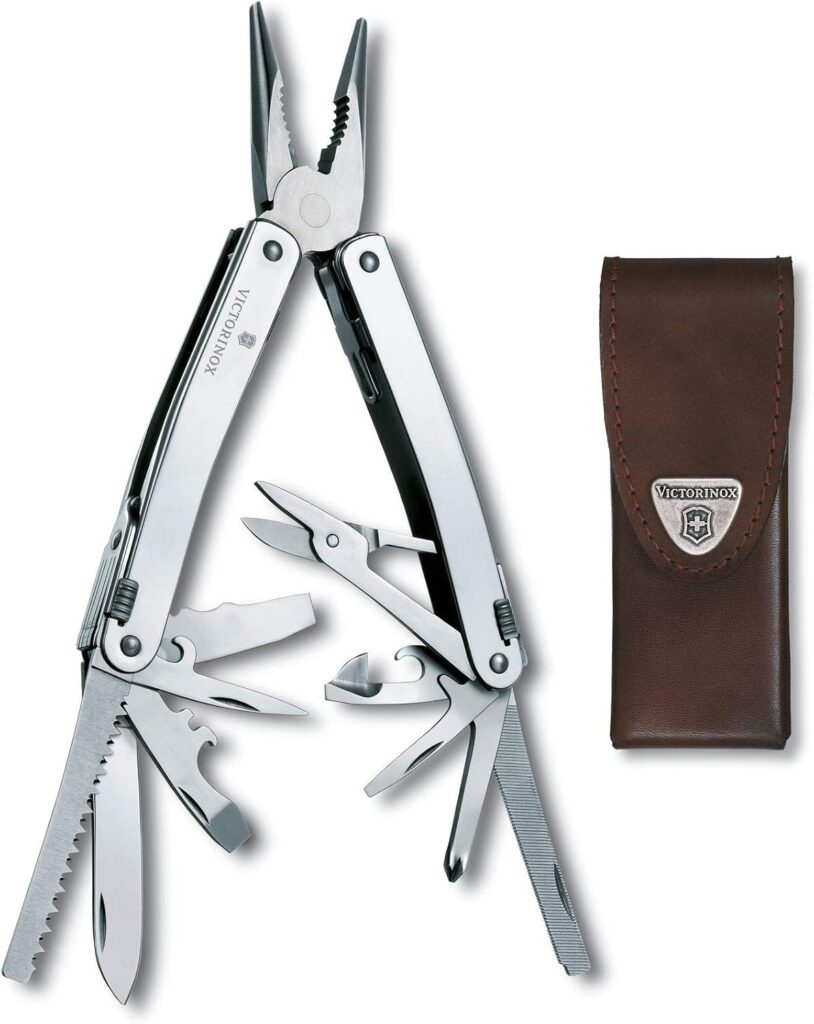
Victorinox SwissTool Spirit X
Swiss precision meets durability. This multitool includes exceptional scissors, pliers, and over 20 functions.
6. File
A good quality file is an often-overlooked but incredibly useful component of any multitool for survival and emergency use. In a bug-out situation, a file can help smooth rough edges on wood or metal, maintain blades and tools, remove rust, and even modify gear in the field. Whether you’re fine-tuning a trap trigger, sharpening a hatchet, or cleaning up a damaged piece of equipment, having a reliable file allows for precision and resourcefulness when conditions are less than ideal. Its compact presence on a multitool adds serious value for repairs, crafting, and gear maintenance—all critical for long-term survival.
Files serve several functions in survival:
- Sharpening blades or fish hooks
- Smoothing rough wood
- Repairing tools or metal parts
Look for:
A dual-sided file (metal and wood) with diamond coating is a bonus.
7. Awl or Punch Tool
An awl or punch is a versatile and valuable tool found on many high-quality multitools for survival and emergency use. In a bug-out scenario, it can be used to puncture tough materials like leather, canvas, or plastic—ideal for quick repairs on tarps, backpacks, or boots. It also works well for drilling starter holes in wood when crafting traps, shelter frames, or other bushcraft tasks. Because it’s sharp and durable, an awl can even be used as an improvised weapon or to scribe marks for measurements. Compact yet capable, this tool adds critical functionality to your multitool when adapting to unpredictable situations in the field.
An awl (or reamer) is a pointed tool that can be used for:
- Puncturing leather or fabric
- Making holes for sewing, lashing, or shelter building
- Creating friction fire boards
This is especially helpful in DIY repairs when materials tear or when constructing traps or structures.
8. Ferro Rod or Fire Starting Compatibility
Ferro rod or fire-starting compatibility is a crucial feature to consider in a multitool for survival and emergency use, especially in situations where warmth, cooking, or signaling is vital. A multitool equipped with a striker-compatible edge or paired with a built-in ferro rod allows you to reliably start a fire even in wet or windy conditions—without relying on lighters or matches that can run out or fail. Fire is one of the most essential survival needs, providing heat, sterilization, and morale. When your multitool doubles as part of your fire-starting system, it reduces the number of items you need to carry while increasing your chances of staying alive and functional in austere environments.
Look for:
Multitools with sharp 90-degree edges or those designed with ferrocerium compatibility.
Top Pick:
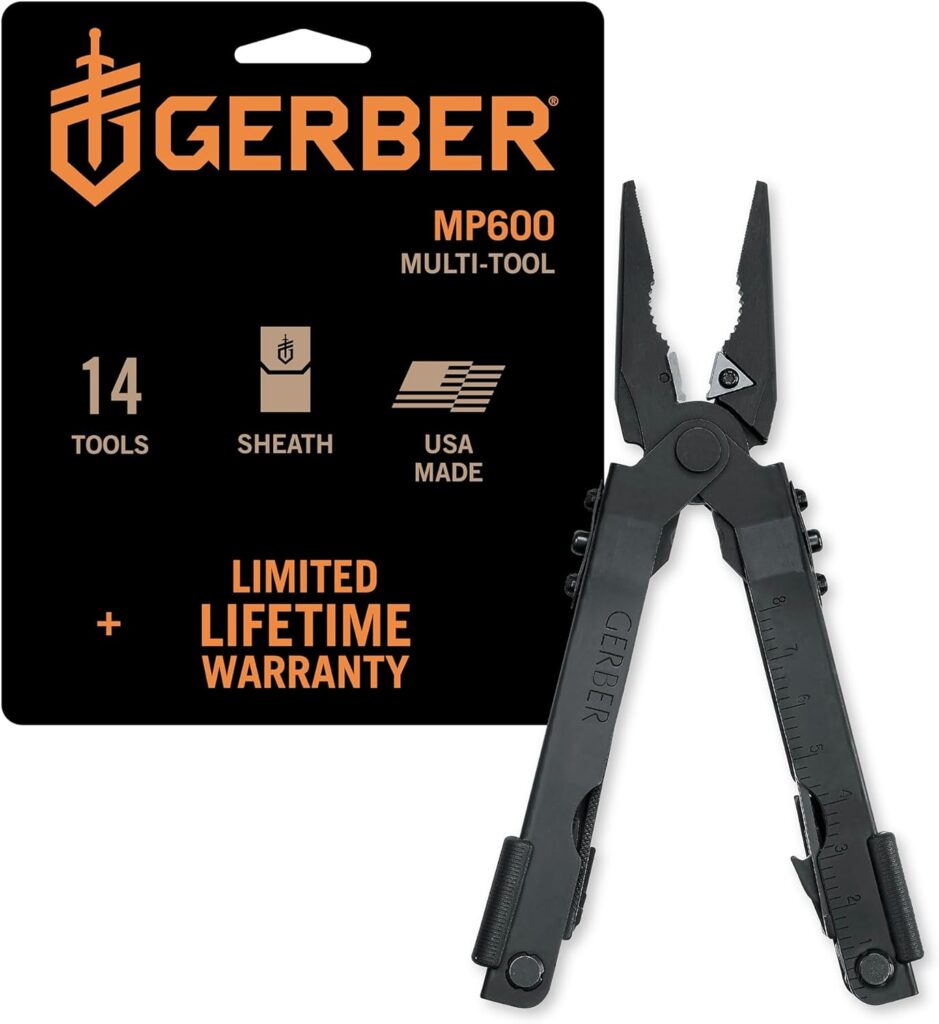
Gerber Gear Multi-Plier 600 – again, this is ideal for survivalists and preppers.
9. One-Hand Operation and Tool Access
One-hand operation and easy tool access are critical features in a multitool for survival and emergency use, where time, dexterity, and efficiency can make all the difference. In a crisis scenario, you may have only one hand free due to injury, carrying gear, or needing to brace yourself. A multitool that allows you to deploy its primary tools—such as the knife, pliers, or saw—with one hand ensures you can respond quickly and safely under pressure. Tools that are accessible without unfolding the entire unit or digging through a kit also reduce downtime in high-stress situations. For real-world emergencies, streamlined functionality is just as important as strength and durability.
Look for:
- Outside-accessible tools
- Thumb holes or thumb studs
- Ambidextrous design
10. Durability and Locking Mechanisms
Durability and reliable locking mechanisms are essential features in a multitool for survival and emergency use, especially when included in a bug-out bag. In high-stress scenarios, your multitool needs to withstand heavy-duty tasks like prying, cutting, or sawing without failing. A well-built multitool made from high-quality materials like stainless steel or titanium ensures it won’t bend, break, or rust when exposed to extreme environments. Just as critical are the locking mechanisms, which keep tools securely in place during use to prevent accidental closures that could cause injury. Whether you’re applying torque with a screwdriver, cutting rope, or using the saw, locking tools provide safety and stability — making your multitool a trustworthy piece of gear when you need it most.
Look for:
- Stainless steel or high-carbon steel construction
- Rust-resistant coating
- Locking tools to prevent injury
11. Size and Portability
Size and portability are crucial when selecting a multitool for survival and emergency use, especially for a bug-out bag where every ounce and inch of space counts. A compact yet functional multitool ensures that you have essential tools on hand without adding unnecessary bulk or weight to your pack. In a high-mobility situation, such as evacuating on foot or navigating tight spaces, a multitool that fits easily into a pouch, pocket, or belt sheath allows for quick access and ease of carry. The ideal multitool balances portability with utility — offering the features you need in an efficient, lightweight form that won’t slow you down when every second and step matters.
Tip:
Choose one with a sturdy pocket clip or belt pouch for fast access.
Best Survival Multitools on Amazon (2025 Picks)
Here are a few top-rated multitools available now, perfect for survivalists and bug-out bag builds:
- Leatherman Wave+ – Premium All-Around Survival Multitool
- Gerber Suspension-NXT – Budget-Friendly & Urban Friendly
- Leatherman Signal – Best for Wilderness Survival
- Victorinox SwissTool Spirit X – High-End Swiss Precision Tool
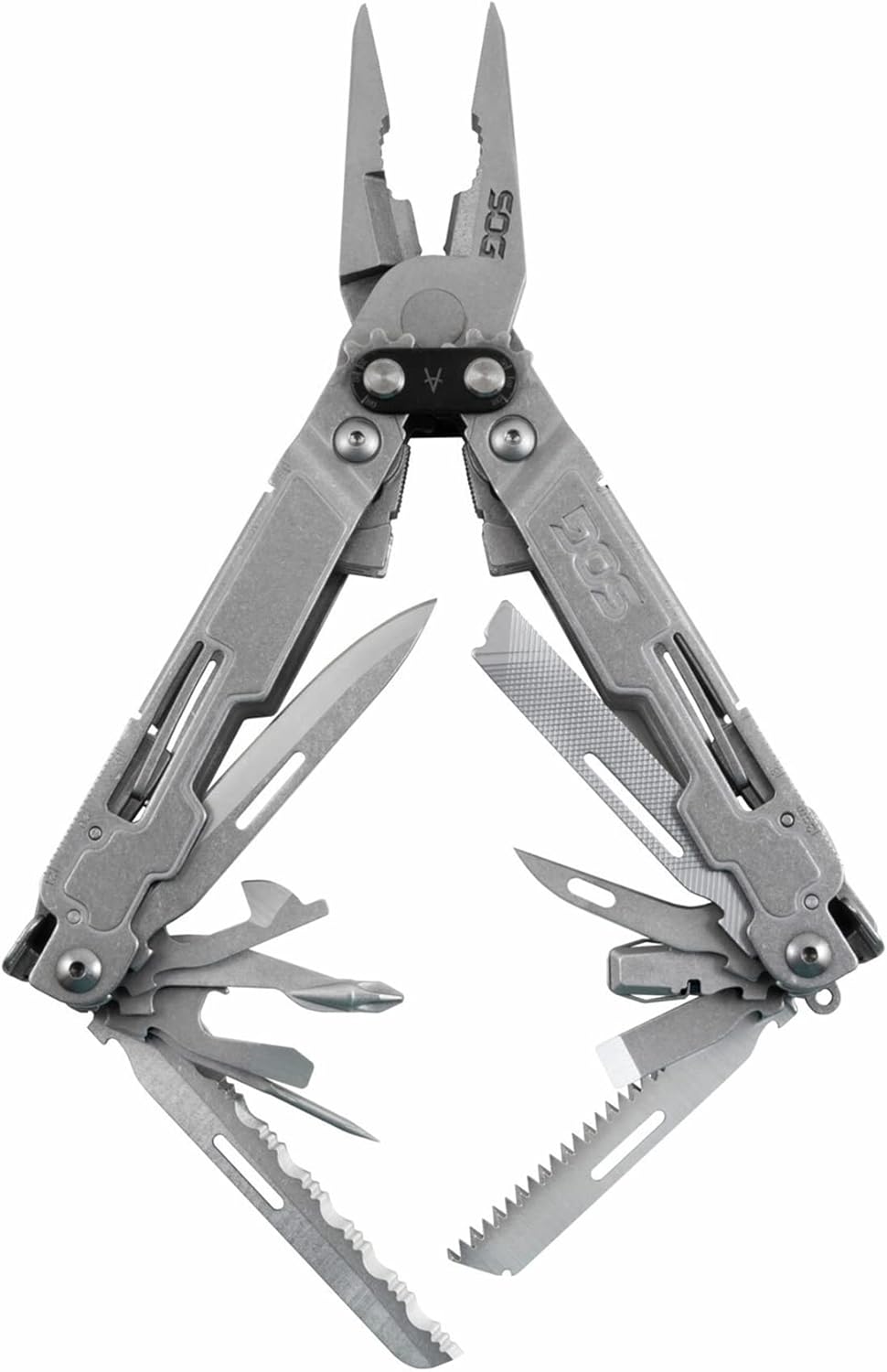
- SOG PowerAccess Deluxe – Heavy-Duty and Tactical
Final Thoughts: Invest in a Multitool That Works When It Matters Most
In a true survival situation, your multitool isn’t just gear — it’s your lifeline. Don’t settle for gimmicks or low-quality knockoffs. Choose a multitool that’s been tested in the real world, offers the core tools you’ll actually need, and holds up under pressure.
Whether you’re building your first bug-out bag or upgrading your EDC, investing in the right multitool is one of the smartest decisions you can make.
Related Reading:
➡️ How to Build a Bug-Out Bag for Beginners
Disclosure: This article contains affiliate links. If you purchase through them, we may earn a small commission at no extra cost to you. We only recommend products we trust.